|
By: Michael Manion |
|
|
Page Views: 4,769 |
| Hashtags: #BreastCancer #Cancer #Health |
| All about breast cancer. |
| Estimated reading time: 2 minute(s) (319 words) |
This form of cancer can occur in women or men, although it is more
prevalent in women--especially in women who have given birth to their first
child after the age of 35, or women who have not had children at all.
Another factor is a family history of cancer. Should any member of a family
develop cancer and need treatment, all members should receive regular checkups.
Other high risk factors include the high consumption of alcohol and/or
caffeine, high–fat diet, and those with diabetes. There is a higher incidence
for middle aged to older women who ingest high amounts of sugar. Here, again, we
see that artificial sweeteners are not good substitutes for sugar, as they may
have an even higher rate of risk then sugar itself.
This risk may have more to do with attitudes concerning sweeteners.
Sugars are seen as bad and to be avoided, yet artificial sweeteners are seen
as safe and so it is thought that more can be used safely. Some artificial
sweeteners actually have some sugar in them. It is present as dextrose,
sucrose or fructose. In most cases a restricted or reduced sugar- sweetened
diet is healthier. First, seek more natural sweeteners and don't overdo it.
Learn not to substitute one sweetener for another that is or might be even
worse for you. Do not assume you can ingest more of something because it
contains fewer calories! Watch those saccharine, cyclamate and aspartame
products. They can eventually kill you depending on how you use them!
Estrogens and oral contraceptives increase ones chances of eventually
developing breast cancer as well.
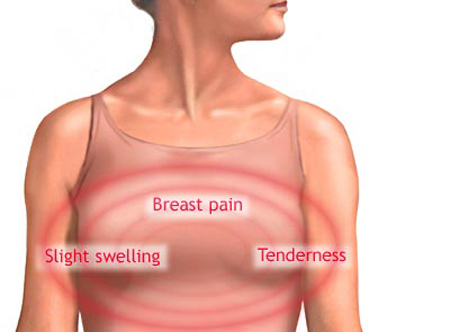
Symptoms appear as a lump or lumps, thickening skin or tissue on the breast
or nipple area, as well as other phenomena such as changes in the shape of the
breast or nipple, redness and/or irritation, soreness, as well as nipple and/or
breast sensitivity not associated with breastfeeding.