|
By: Michael Manion |
|
|
Page Views: 15,473 |
| Hashtags: #Migraines #Headaches #Health |
| All about migraine headaches. |
| Estimated reading time: 10 minute(s) (2326 words) |
Classic Migraine Headache
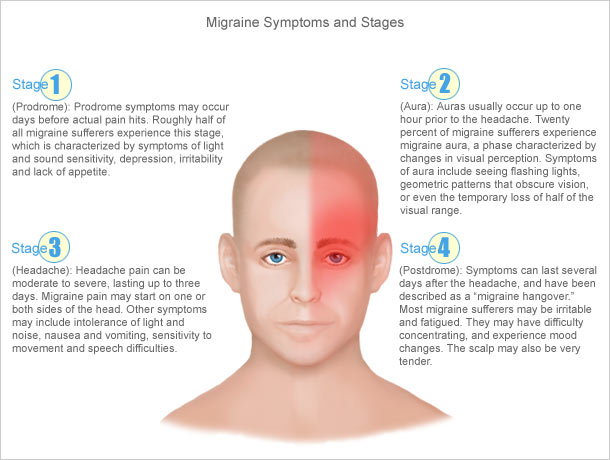
A migraine headache is a vascular headache. It involves the excessive
dilation or contraction of the brain's blood vessels. The word migraine is
derived from the Greek hemikrania, which means, "half a skull" or
"crown". Nausea, vomiting, blurred vision and tingling and numbness in the limbs usually
accompany a migraine headache. One can last up to eighteen hours.
A classic migraine is preceded by a set of symptoms referred to as an aura.
An aura consists of speech disorders, weakness, and disturbances in the senses
of vision and/or smell. Visual effects can include brilliant stars, sparks,
flashes or simple geometric forms passing across the visual field.
If you are a susceptible individual, any number of things can trigger a migraine;
including low blood sugar, which is the most frequently -reported cause. The lower the blood sugar level during an attack, the more severe the
headache can be. Foods that either effect the blood sugar level or can effect
blood flow are chocolate, citrus fruits, anything containing alcohol (especially
red wine), any foods that are aged, cured, pickled, soured, yeasted or
fermented, and allergies. Smoking, because the carbon monoxide in the substance
expands the blood vessels and the nicotine contracts them, often triggers
migraines--especially in individuals who do not smoke, but are exposed to the
second-hand smoke of others.
Constipation (which is usually caused by dehydration, another cause), stress,
liver malfunction, too much or too little sleep, emotional changes, hormonal
changes, sun glare, flashing lights, dental problems, lack of exercise and
changes in barometric pressure have also been reported to trigger these
headaches.
Over-the-counter painkillers although not classified as triggering a migraine headache, wear off and can leave you with a
worse headache than before. After that, a person tends to think he or she needs more
painkillers each time. Eventually the pills have little or no effect. If you want to avoid overdosing on painkillers before they
kill you, and not just the pain, these are best to avoid.
Who is affected by this disorder? About 10% of the population of earth is
plagued by migraines of some kind. In the United States, statistics show us, on a
limited study, that 8.7% of females are afflicted by migraines while 2.6% of
males are affected. The higher occurrence of migraines in females is probably due to
hormone fluctuations. They occur more often between the ages of 20 and 35 in
adults; frequency decreases with age. In children, migraines may be
misdiagnosed as colic,
periodic abdominal pains, vomiting, dizziness or severe motion sickness.
According to the United States Centers for Disease Control and Prevention, there
was an increase of 60% in migraine headaches on all age groups during the 1980's through the 1990's.
A number of food supplements have been shown to minimize the conditions that
trigger migraine headaches. Since most of the triggers of migraines also are
triggers (or causes) of other kinds of headaches, begin by taking the supplements
listed in the previous sections. The following increased doses are suggested:
- Calcium, 2,000 mg daily, to help regulate muscular tone and transmit nerve impulses throughout the body and to the brain
- Coenzyme Q10, 60 mg daily, to increase the oxygenation to the brain
- Vitamin F, at least 19 grains or 1,200 mg, 1 to 2 doses taken daily
- Lecithin, 1,200 mg, 3 to 6 capsules when you feel a migraine coming on
In one study, those persons who had
taken between 3 to 6 1,200 mg capsules of Lecithin when
they felt a migraine coming reported fewer, milder headaches.
You can also take Lecithin in granulated or powdered form.
- Vitamin B3 (niacin), 200 mg 3 times a day
- Niacinamide, 800 mg daily (do not exceed this amount) to increase
blood flow in the brain
Do not take niacin if you have high blood pressure, liver disorder or gout.
- Vitamin C Complex, time-released, 3,000 to 9,000 mg daily in divided doses
Ensure you are taking at least 200 mg of rutin as part of your Vitamin C complex.
Vitamin C aids in producing anti-stress adrenal hormones and enhances immunity. Rutin
removes toxic metals, which can cause migraines.
- Bio Rizin (from American Biologics) contains licorice extract which helps
to improve your energy level and relieve allergy symptoms that can trigger migraines.
Do not use this herb on a daily basis for more than seven
days in a row. Avoid it if you have high blood pressure.
Garlic is helpful and is a potent detoxifier. Garlique brand Garlic tablets or other,
comparable brands on the market contain at least a clove of garlic (allium sativum)
or 400 mg., equivalent to taking 1,200 mg of fresh garlic. Taken once a day, it also regulates cholesterol. It is helpful in regulating
blood pressure levels as well.
If you are taking a good Vitamin B Complex in 100 mg doses daily, ensure that your Vitamin B
complex has at least 100 mg of
pantothenic acid (Vitamin B5) in it. Take an additional 100 mg of this daily.
It is needed by the adrenal glands when the body is under stress. Another form
of Vitamin B5 is royal jelly. You can substitute 1 teaspoon full once or twice a
day. Increase your intake of pyridoxine, Vitamin B6 by 50 mg. It is required for
normal brain function. Use a hypoallergenic form.
One recommendation is to add Taurine Plus from American Biologics, 10 to 20 drops
a day, taken under the tongue. It is an important antioxidant and immune
regulator. It is needed for white blood cell activation and neurological
function.
Beside those herbs used to treat headaches, some others can also be effective
in the treatment of migraines:
- Cayenne (capsicum)
- Chamomile
- Feverfew
- Ginger root
- Peppermint
- Valerian root
- White willow bank
- Wormwood
Do not use wormwood during pregnancy; it is not recommended for long-term use.
A study conducted by The University of Nottingham in England on its effects upon
migraine suffers, has shown that participants who took the
herb, feverfew, had an average of 24 percent fewer migraine headaches than those
who did not take it. Other findings were the reduction of vomiting and other
side effects.
Make sure your diet is low in simple carbohydrates and high in protein.
Include the following foods in your diet:
- Almonds
- Almond milk
- Watercress
- Parsley
- Fennel
- Garlic
- Cherries
- Fresh pineapple
Avoid foods that contain the amino acid tryamine. These include
aged meats, avocadoes, bananas, beer, cabbage, canned fish such as sardines and
tuna, dairy products, eggplant, hard cheeses, potatoes, raspberries, red plums,
tomatoes, wine, and yeast products.
Also avoid alcoholic beverages, aspirin,
chocolate, monosodium glutamate (MSG), nitrate preservatives such are found in hot dogs
and lunchmeats. Avoid spicy foods, and salt and acid-forming foods such as
meat, cereal, bread and grains, fried foods and fatty greasy foods. Eat small
meals, and if you have snacks, make them small as well. This will assist in
stabilizing any wide swings in blood sugar that may precipitate a migraine.
Make sure to get regular, moderate, exercise. Massage the back of your neck and
head daily or have a professional massage those areas for you. Handle any
problems with your teeth that could trigger a migraine.
There is a treatment for those that have had migraines brought on by coffee
or caffeine. At the first suspicion that a migraine is about to start, drink one
or two cups of strong black coffee, and then lie down in a dark, quiet room. In order for
this treatment to be effective, you must not consume any other form of caffeine.
This would include cocoa, chocolate, decaffeinated products of any kind (as they
have some small amount of caffeine in them), soft drinks with caffeine and any over-the counter
or prescription medications that contain caffeine.
Never discontinue a prescribed medication or change the dosage without consulting your physician first.
When you know you are susceptible to migraine headaches, smoking is not an
option. Avoid smoking at all costs, especially second-hand smoke, which is twice
as potent for a non-smoker than it is for those people who do smoke. It could make you
very ill. The nicotine from tobacco can trigger a flush reaction that can bring
on a migraine. It can also impair your lungs from taking in enough oxygen to
feed the brain.
A study reported in the British medical journal The Lancet stated that
food allergies could be detected and that when specific foods were eliminated
from the diet of those who had suffered from migraines, as many as 93 percent of
them found relief. It would be interesting to see from future studies which
foods are most used by migraine suffers to possibly determine cravings,
addictions or patterns in eating that may need to be addressed as well.
Studies of magnetic therapy have shown that the north pole of a 4-by-6 ceramic magnet,
applied to the area in pain, has brought relief to a significant number of
migraine sufferers. Sleeping with these magnets applied directly to the head, or larger
magnets placed suspended over the head, can affect a more lasting result.
Apitherapy is also known as bee therapy. This involves the use of honeybee
products such as raw honey, bee pollen, propolis, royal jelly and bee venom.
Preparations from pieces of honeycomb containing bee pollen are reported to be
successful for treating allergies which can bring on headaches and migraines.
Bee venom is being used today to treat chronic inflammatory illness and to
alleviate chronic pain and migraine headaches. After being tested with very
small amounts of bee venom you might proceed with this therapy. This involves
testing to see if you might have possible allergic reactions to bee venom. If
you test positive for an allergic reaction you would not continue further in
some cases. The rule is you never use bee venom without an emergency bee sting
kit which contains epinephrine to handle any reaction. The usual treatment involves
stinging the patient at specific sites relative to the illness and repeating the
stings over a period of time. The components of bee venom that assist in the
treatment of headaches and migraines are:
Mellitin: This can show to be 100% more potent then hydrocortisol as
an anti-inflammatory agent. Mast Cell Degranulating Peptide: This can
help to increase short term memory. Apamin: Enhances long term synaptic
transmission and shortens duration of nerve action potential. Hyaluronidase:
Acts to rid the cells of toxins, allowing healing substances to reach the cells.
Dopamine: A neurotransmitter that increases motor activity. Adolapin:
Works as an analgesic.
Studies have shown that biofeedback is good for lessoning the severity and
the frequency of migraine headaches. It is usual for a person at the onset
of a migraine headache, to have his or her hands cool down to as low as 65 Degrees
Fahrenheit. One way to avert this is by raising the temperature of a person's
hands. If you are trained in biofeedback techniques, you utilize breathing techniques that
raise your body temperature to prevent this. Taking hot showers or baths is another good
way to approach this.
Some kinds of music have a calming effect and can help to relieve migraines.
These can include soft melodic music as well as the sounds of nature. They
assist us to relax and unwind from any over stressful relationships of the day.
If migraines are caused by imbalance in your cell or tissue salts you may
want to consult a naturopathic doctor or have them test you for which ones you
are lacking in. Very often the biochemical treatment for migraines that are accompanied by
nausea and bitter taste in your mouth. Migraines, in this case, may worsen in damp weather or very warm
weather. This may be remedied by including more of the tissue salt Sodium Sulphate in your
diet.
Women who are affected by migraine headaches, may benefit from the use of natural
progesterone cream. The drug most commonly prescribed for the relief of migraine
headaches is called ergotamine. It is sold under the brand names of Cafergot,
Ergostat and Wigraine. These can be addictive and should not be taken for more
then two days in any one week. Cafergot and Wigraine also contain caffeine.
A relatively new drug, sumatriptan (Imitrex), relieves acute migraine headaches by
increasing the amount of serotonin in the brain. Clinical studies have shown
that 82 percent of people who have migraine headaches who took sumatriptan,
improved within two hours of treatment. A majority taking this treatment, 65%,
were pain-free. This drug is administered in injection form and is sold in home
injection kits. There are side effects that include dizziness, drowsiness,
malaise and anxiety.
Sumatriptan is not for all migraine headaches sufferers, because
it can potentially cause coronary artery constriction. It should not be
administered at all to anyone who has angina or a
history of heart attack. It may also cause high blood pressure so that people
with uncontrolled hypertension (high blood pressure) should not take this drug.
Other drugs that are administered as preventatives rather than as therapy for
acute attacks of a migraine headache include amitriptyline (Elavil, Endep),
diazepam (Valium), methysergide (Sansert) and propranolol (Inderal).
Common Migraine Headache
This form of a headache is accompanied by severe throbbing pain and often
affects one side of the head, usually centered at the temple or behind one ear. This
form of a migraine headache can be accompanied by nausea, vomiting, cold hands,
dizziness, sensitivity to light and sounds, blurred vision, and tingling and
numbness in the limbs; and can last up to eighteen hours. It usually comes on slowly
and lasts from two to seventy-two hours. Like the classic migraine
headache, it, too, is caused by the excessive dilation or contraction of the blood
vessels of the brain.
Treatments for common migraine headaches are the same as covered in the previous section.