|
By: Michael Manion |
|
|
Page Views: 45,886 |
| Hashtags: #Gallbladder #Health |
| All about your gallbladder. |
| Estimated reading time: 8 minute(s) (1739 words) |
Gallbladder Disorders
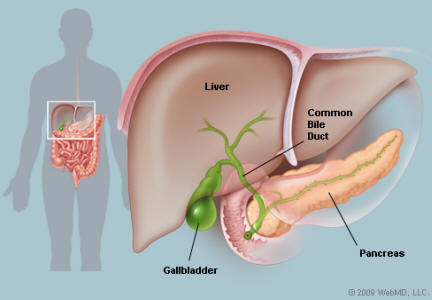
Bile contains water, cholesterol,
bile, bile salts, bilirubin, calcium, lecithin, and other substances. The solid portions
are calcium and cholesterol. The bile salts act to keep all these dissolved
as a liquid. Some people do not have the proper ratio of chemicals in the gall
bladder; this can cause cholesterol crystals to form. Such crystals are often called
gallstones.
This condition is called cholelithiasis.
Many times, these stones can pass freely into the small intestine with no
problem. Often persons with gallstones have no symptoms. The problems
occur when the gallstones become lodged in the cystic duct, blocking the
flow of bile from the gall bladder into the system. Even then, this only becomes a problem
if the gall bladder becomes inflamed or, more seriously, infection sets in. if
these gallstones become trapped in the cystic duct, most times it is not
serious. The symptoms can be nausea, vomiting and pain in the upper right
abdominal region. These symptoms often arise after the individual has
eaten fried or fatty foods, which exacerbate these symptoms. Sometimes people
with these symptoms believe they
are having indigestion, food poisoning or even a heart attack.
If the gall bladder becomes inflamed, it can cause severe pain in the upper right
abdomen. This may be accompanied by fever, nausea, and vomiting. This condition must
be treated immediately. If left untreated, inflammation of the gall bladder,
called cholecystitis, can be life threatening. If there are no gallstones, an antispasmodic, laxative, rest and a mild natural sedative may
be effective. One should also study the cause of the inflammation so
that it can be properly treated. In many cases, it is simply a matter of improper diet.
Sometimes cholesterol crystallizes, combining with bile in the gall bladder,
to form gallstones in the common bile duct. If a stone
blocks this duct, it can cause chills, fever, swollen abdomen, sharp pain in the upper right
abdominal region, and jaundice (a yellowish pigmentation of the skin
caused by a build up of too much bile which eventually makes its way into the
blood stream).
Some risk factors contribute to the formation of gall stones.
- A tendency toward gallstones may be inherited. When other people in your immediate blood line have had or
exhibit having gall stones, this increases the likelihood of your devolving gall stones as well.
- As you get older, more cholesterol accumulates in your system, increasing your chances of developing gall stones.
- Being overweight increases your chances of developing gall stones, due to the increase of fat deposits and
possible increase in the level of cholesterol in your body.
- Quick weight loss can change the chemical components in the body and thus cholesterol crystals have a higher likelihood
to form. In these last two cases, a drug that has been proven helpful in losing
weight and not developing gall stones is called Ursidioxiacid.
- Pregnancy changes in the body's chemistry, and the increase of weight or other contributing factors also
contribute as described above. This factor, of course, decreases with the onset of menopause.
One very large assistance that can help prevent or alleviate this
condition is proper diet. Nutrition is a key component in the possible arrest of
the contributing factors. These are suggested nutritional supplements:
Nutrients
| Supplement
| Suggested dosage
| Comments
|
| Alfalfa |
|
See under Herbs, below. |
| Essential fatty acids |
As directed on label. |
Important constituents of every living cell. Needed for repair and prevention of gallstones. |
| Lecithin granules or capsules |
1 tbsp 3 times daily, before meals. |
|
| 1,200 mg 3 times daily, before meals. |
A fat emulsifier; aids digestion of fats. |
|
| L-Glycine |
500 mg daily, on an empty stomach. Take with water or
juice. Do not take with milk. Take with 50 mg vitamin B6 and 100 mg
vitamin C for better absorption. |
Essential for the biosynthesis of nucleic and bile
acids. |
| Multi-enzyme complex with ox bile |
As directed on label. Take before meals. |
Aids in digestion if too little bile is secreted from
the gallbladder. Caution: Do not give this supplement to a child. If you
have a history of ulcers, do not use a formula containing HCI. |
| Vitamin A |
25,000 IU daily. If you are pregnant, do not exceed
10,000 IU daily. |
Needed for repair of tissues. Use emulsion form for
easier assimilation |
| Vitamin B complex plus extra vitamin B12 and choline
and inositol |
50 mg 3 times daily, with meals. 2,000 mcg daily 500
mg daily. 500 mg daily. |
All B vitamins are necessary for proper digestion.
Use a high-potency formula. Important in cholesterol metabolism and liver
and gallbladder function. |
| Vitamin C |
3,000 mg daily. |
Deficiency can lead to gallstones. |
| Vitamin E |
600 IU daily. |
Prevents fats from becoming rancid. |
Herbs
- Alfalfa
cleanses the liver and supplies necessary vitamins and minerals. Twice a day
for two days, take 1,000 milligrams in tablet or capsule form with a glass
of warm water.
- Peppermint
oil capsules are used in Europe to cleanse the gallbladder.
- Other
beneficial herbs include barberry root bark, catnip, cramp bark,
dandelion, fennel, ginger root, horsetail, parsley, and wild yam.
Caution: Do not use barberry during pregnancy.
Recommendations
For inflammation of the gall bladder, eat no solid food for
a few days. Consume only distilled or spring water. Then drink juices such as
pear, beet, and apple for three days. Then add solid foods: shredded raw beets
with 2 tablespoons of olive oil, fresh lemon juice, and freshly made uncooked
applesauce made in a blender or food processor.
For gallstones, take 3 tablespoons of olive oil with the
juice of a lemon before bed and upon awakening. Stones are often passed and
eliminated in the stool with this technique--look for them. You can use
grapefruit juice instead. To relieve pain, try using hot castor oil packs on the
gall bladder area. Place castor oil in a pan and heat, but do not boil it. Dip a
piece of cheesecloth or other white cotton material into the oil until the cloth
is saturated. Apply the cloth to the affected area and cover it with a piece of
plastic that is larger in size than the cotton cloth. Place a heating pad over
the plastic and use it to keep the pack warm. Keep the pack in place for
one-half to two hours, as needed.
- Eat
a diet consisting of 75% raw foods. Include in the diet applesauce,
eggs, yogurt, cottage cheese, broiled fish, fresh apples, and beets.
- To
cleanse the system, consume as much pure apple juice as possible for five
days. Add pear juice occasionally. Beet juice also cleanses the liver.
- Avoid
sugar and products containing sugar. Avoid all animal fat and meat, fried
foods, spicy foods, margarine, soft drinks, commercial oils, coffee,
chocolate, and refined carbohydrates.
- While
you have pain, nausea and/or vomiting, and fever, follow a fasting program
and use coffee enemas for a few days. The coffee enema is important. You can
also use garlic in the enema.
- A
detoxification program for the liver and colon is important for improved
gallbladder function. Use cleansing enemas if you have chronic problems.
- Do
not overeat. Obesity and gall bladder disease are related. Females aged forty
and over who are overweight and who have had children are more likely than
most people to suffer from disorders of the gallbladder.
Considerations
- Kombucha tea may be beneficial for gallstones.
- Rapid weight changes can cause gallbladder problems.
The
recommended treatment for gallstones is usually surgical removal of the gall
bladder. If symptoms are not too severe, this is usually first
approached through what is called laparosopic surgery, a one day procedure
where four small incisions are placed in the abdomen. A carbon-dioxide
inflation is placed into the area to allow it to expand and a small tube
with a camera at the end is inserted which sends a transmission back to a
television monitor so that doctors can view the area. A clamp is placed on
the cystic duct and the gall bladder is removed. After the procedure, you may go home
the same day and return to normal activity within a week or two.
Sometimes,
if there is a need to remove the gall bladder immediately, a cholecystectomy
is required. In this case, a large incision is placed in the area of the
liver and gall bladder and the organ is clamped cut and removed. This
may require a five-day hospital stay, and allow returning to normal activity after
three to six weeks of home recovery.
Sometimes, while performing laparoscopic surgery, doctors will assess what needs
to be done and switch to performing
a cholecystectomy. Both these procedures take about an hour and general anesthesia
is administered prior to any surgery. Tell your doctor if you know you have
any sensitively to any form of anesthesia. Sometimes after the operations
you may experience some gas and/or flatulence along with diarrhea
while the body is seeking to normalize itself.
However, if gallstones show up on an x-ray but do not cause
symptoms, there is no need for surgery. A gallstone may slip into a common bile
duct. If this occurs, extraction or surgical removal may be necessary. If the stone is
large enough, it can be removed. This works in single occurrences and with
medications to prevent others from forming. Sometimes
stones in the gallbladder can be fragmented or dissolved without surgery,
using drugs. Sound waves were thought to be useful but they are no longer
considered helpful as surgeons cannot pinpoint the stones as accurately as needed in too
many cases. Bile acid preparations used to dissolve stones
work very slowly and can be used only on small stones.
Psychological Contributors
It is well-known that certain psychological profiles favor
certain diseases and conditions. According to Louise L. Hay's book, You Can
Heal Your Life, the attitudes that promote gallstones are bitterness,
hard thoughts, condemnation and pride. She recommends this daily
affirmation:
"There is joyous release of the past. Life is sweet and so am I."